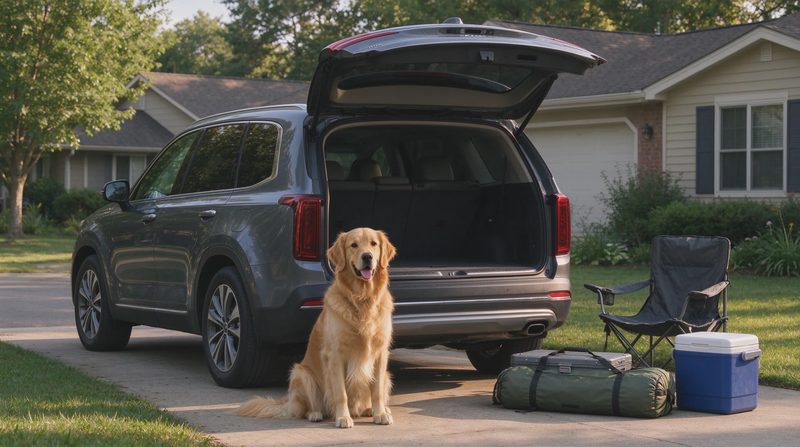
Families choose a three-row SUV because the brochure shows room for everyone and everything. Real life arrives with two rigid child seats, a booster for the older kid, a medium or large dog, a stroller, grocery totes, and the weekly sports gear. The Telluride is often purchased for exactly this combination. Whether the combination works without daily frustration depends on the second-row configuration, the width and design of the child seats, the size and temperament of the dog, and how cargo is managed when the third row is left up or folded.
This discussion stays with packaging and logistics. It does not invent fitment tests or claim that every child seat and every dog will behave the same way. Child-seat installation must always follow the seat manufacturer’s instructions and the vehicle owner’s manual. Dog restraint and temperature management are safety issues, not afterthoughts.
Second-Row Configuration Is the First Decision
Telluride buyers typically choose between a second-row bench and a pair of captain’s chairs. The bench supplies three seating positions and is usually the better starting point when two child seats and a booster must share the same row. Captain’s chairs create a convenient walk-through to the third row and often feel more open, but they limit the second row to two positions and can make side-by-side installation of wide child seats more difficult.
Families whose normal load is two young children plus an older child in a booster almost always prefer the bench for maximum flexibility. Families who rarely need three second-row seats and who value easy third-row access may accept captain’s chairs and place the booster in the third row. The choice is difficult to reverse after delivery, so it should be made with the actual child seats and the actual daily passenger count in mind.
Installing Two Child Seats Side by Side
Most Telluride configurations provide LATCH lower anchors in the second-row outboard positions. Some also allow a center installation using the seat belt. Modern child seats with rigid or semi-rigid lower connectors can sit wider than older belt-only designs, so two seats placed next to each other may leave little or no gap and can crowd the center position.
Install the more difficult seat first. Verify that each seat sits flat on the vehicle cushion and that the lower connectors or seat belt achieve the tight fit required by the child-seat manual. Check that the front seats can still travel far enough for the primary drivers. If the child seats are especially wide or have large side-impact wings, schedule a test installation in the exact vehicle before you buy. Some combinations that appear workable on paper feel cramped once the seats are locked in place and the front occupants try to find a comfortable driving position.
Placing the Booster Without Creating New Problems
Once the two child seats occupy the outboard second-row positions on a bench, the remaining center spot is the natural home for a booster. On a captain’s-chair configuration the booster usually moves to the third row. Third-row boosters are acceptable for many children on short and medium trips, but access requires folding or tumbling a second-row seat and the seating surface may be firmer or less contoured.
Confirm that the booster’s belt path aligns cleanly with the vehicle’s seat-belt geometry and that the shoulder belt sits properly across the child’s collarbone. High-backed boosters can interfere with headrest position or rear visibility; backless boosters are more compact but offer less side support. The installation must be stable enough that the child cannot shift the booster out of position during normal driving.
Creating a Safe, Usable Space for the Dog
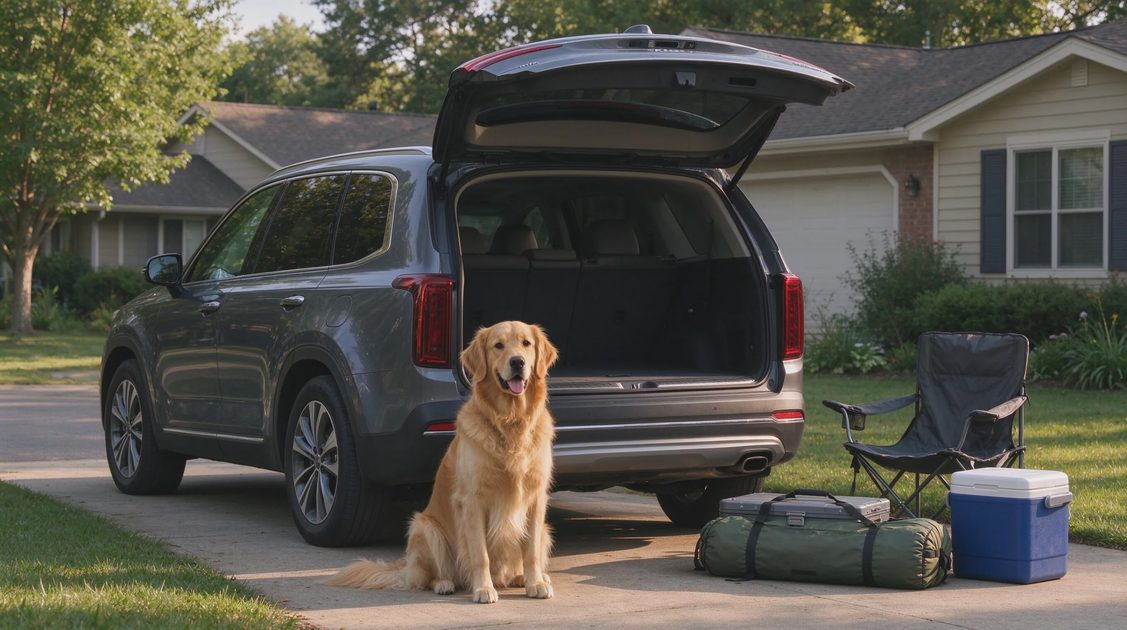
A medium or large dog needs a defined area that does not compromise child-seat installation or emergency exit paths. With the third row upright, the cargo volume behind it is modest; many dog crates and barriers will not fit without folding at least one section of the third row. Most families who travel regularly with a dog therefore fold the third row and use a cargo liner, a hammock-style cover, or a secured crate in the expanded space.
A rigid or flexible cargo barrier helps keep the dog from climbing into the passenger area. Crash-tested harnesses that attach to cargo anchors offer another option for dogs that ride calmly. Unrestrained dogs can become distractions or projectiles; neither is acceptable when children are also in the vehicle. In hot or cold weather the cargo area must still allow adequate ventilation and temperature control—never leave a dog unattended in a closed vehicle.
Managing Cargo Around the Fixed Seats
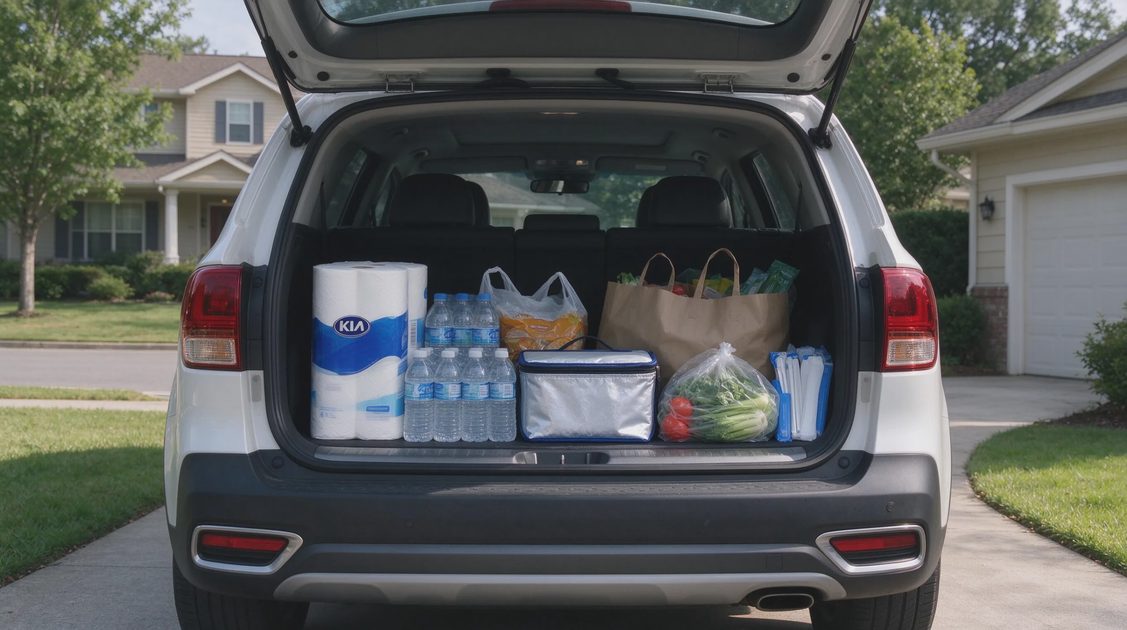
Two installed child seats and a booster consume most of the second-row real estate. Remaining cargo must fit behind the third row or in the space created when the third row is folded. A stroller, a folding wagon, several grocery totes, and sports equipment quickly fill the available volume once a dog crate or barrier is also present. Roof-mounted boxes or hitch cargo carriers can add capacity for longer trips but introduce extra cost, wind noise, and loading effort.
Daily routines reward consistency. Leave the child seats installed if the Telluride is the primary family vehicle. Keep the dog’s liner or harness ready so loading does not require reinvention every morning. Assign fixed locations for the items used most often. Power liftgates reduce the struggle when both arms are full of children, bags, or a leashed dog. Families that alternate between kid-heavy and cargo-heavy days often leave the third row folded more days than not.
Safety Rules That Override Convenience
Child seats must be installed exactly as the seat manufacturer and the vehicle manual require. LATCH lower anchors have weight limits; once the combined weight of child and seat exceeds the limit, the seat belt becomes the primary restraint. Rear-facing seats must never be placed in front of an active airbag. Front-seat occupants must still be able to sit at a safe distance from the airbags while allowing enough room for the child seats behind them.
Dogs must be secured so they cannot interfere with the driver or injure passengers in a sudden stop. In winter, allow extra time for loading and for the cabin to reach a comfortable temperature. In summer, use window shades, preconditioning, or ventilated parking whenever possible. These practices are not optional extras; they are part of the baseline safety design of any family trip.
Practical Configuration Reference
The table below summarizes common layout choices. Exact results depend on the specific child seats, the dog’s size, and the second-row option in the vehicle you are considering.
Family Element | Bench Second Row | Captain’s Chairs Second Row | Real-World Notes |
|---|---|---|---|
Two child seats | Side-by-side usually workable | One seat per chair; center unavailable | Test actual seat width and LATCH access |
Booster location | Center second-row or third-row | Third-row most practical | Verify belt fit and ease of access |
Dog with third row up | Limited space; small dogs only | Same cargo limitation | Most crates will not fit |
Dog with third row folded | Usable cargo area for crate or liner | Usable cargo area for crate or liner | Barrier or harness strongly recommended |
Daily loading efficiency | Child seats stay installed; dog area fixed | Walk-through aids third-row access | Power liftgate reduces friction |
Weekend or road-trip use | All seat positions available; cargo tight | Easier third-row entry; cargo similar | Roof box or hitch carrier may be needed |
Treat the table as a planning checklist, not a guarantee. Always perform a physical test with the actual seats and, if possible, the dog before finalizing the purchase.
Building a Sustainable Daily System
Select the second-row layout that matches the passenger combination you will carry most often. Install high-quality child seats correctly and leave them in place. Design a dedicated, protected zone for the dog that never compromises child safety or driver attention. Adopt a simple, repeatable cargo routine so that groceries, sports gear, and the dog can share the vehicle without daily negotiation.
The Telluride’s overall size gives many families a realistic chance of transporting two child seats, a booster, and a dog without constant compromise. Success is less about the model name and more about deliberate configuration choices, correct installation, and consistent habits. Test the full combination in the actual vehicle, follow every installation and restraint rule, and treat space management as part of the ownership design rather than an after-the-fact problem.


