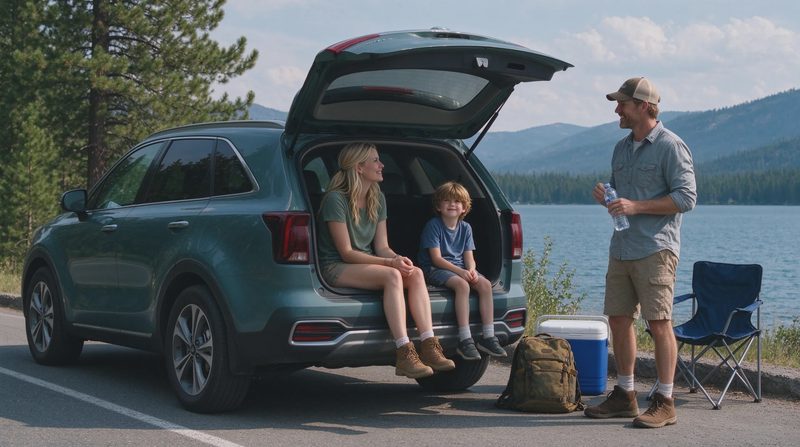
Three-row electric SUVs are marketed with passenger counts and interior photographs that suggest everyone will be comfortable. The EV9 is no exception. Families considering it want to know whether the third row is a genuine seating area for children and occasional adults or primarily a space for shorter trips and smaller passengers. Legroom is only one part of that answer. Access, seat comfort, headroom, floor height, and how the second row is configured all affect whether people will actually sit back there without complaint.
This article examines the third row from a family-use perspective. It does not invent measurement claims or present controlled test results. Real comfort depends on the height and proportions of the passengers, the position of the second-row seats, the duration of the trip, and the presence of child seats or boosters. The goal is to set expectations that match daily and weekend use rather than brochure ideals
.
Access Matters Before Legroom
Even generous legroom is irrelevant if reaching the third row is awkward. The EV9’s second-row design influences how easily passengers can climb back. Captain’s chairs with a wide pass-through simplify entry. A sliding and reclining second-row bench can also create a usable path, but the path must stay open enough for an adult or an older child carrying a backpack.
Families should test the entry motion with the actual second-row positions they expect to use daily. If child seats occupy the second row, the available path narrows. Adults who will occasionally sit in the third row need to know whether they can enter and exit without excessive twisting or contact with the door frame. Children manage tighter spaces more easily, but they still need a stable handhold and a clear place to step.
Legroom for Children Versus Adults
Children and smaller teens generally find third-row legroom in vehicles of this size acceptable for typical family trips. Their knees clear the second-row seatbacks, and the seating duration is usually limited to school runs, sports travel, or weekend drives. Adults experience the same space differently. Knee room becomes the first constraint, followed by the ability to vary sitting posture on longer rides.
The position of the second-row seats is decisive. When the second row is slid fully rearward for maximum front-passenger legroom, third-row space shrinks. When the second row is moved forward to prioritize the third row, adults in the second row may feel cramped. Families that regularly carry adults in both rows must find a compromise position and accept that neither row will have ideal space simultaneously.
Seat Comfort and Support
Legroom numbers do not capture cushion firmness, thigh support, or backrest angle. Third-row seats in many three-row SUVs are firmer and flatter than the second-row seats. On short trips the difference is minor. On drives longer than an hour, adults may notice less support and fewer opportunities to shift position. Children are usually less sensitive to these differences, especially if they are occupied with devices or windows.
Floor height also affects comfort. A higher floor can leave adult passengers with their knees elevated, reducing circulation on long trips. A lower floor improves the seating angle but may reduce under-seat storage. Families should sit in the third row for several minutes during a test drive, ideally with the second row occupied and adjusted to a realistic position, rather than judging the space from a quick glance.
Headroom and Shoulder Room
Headroom in the third row is influenced by roof design, panoramic glass, and seat height. Taller adults may find their heads closer to the headliner than in the second row, particularly if the vehicle has a fixed panoramic roof. Shoulder room for three across is rarely comfortable in this class; two adults or two children side by side is the realistic expectation.
Window size and shape affect the sense of space. Larger third-row windows reduce the closed-in feeling that some passengers dislike. Families with children who are prone to motion sensitivity may prefer a third-row position with a clear outward view. These qualitative factors often matter as much as the raw legroom figure once the vehicle is in regular use.
Child Seats and Boosters in the Third Row
Some families place a booster or even a forward-facing child seat in the third row when the second row is full. LATCH availability, seat-belt geometry, and the stability of the seating surface determine whether this is practical. The third row is generally less convenient for frequent child-seat installation and removal, so it works best for a seat that can stay in place or for boosters that are easy to move.
Access remains the larger issue. An adult must be able to secure the child and the seat belt without an awkward reach. On longer trips a child in the third row should still be visible to the driver or front passenger, either directly or through a mirror system. These considerations often lead families to keep younger children in the second row and reserve the third row for older children or adults.
Trip Length Changes the Equation
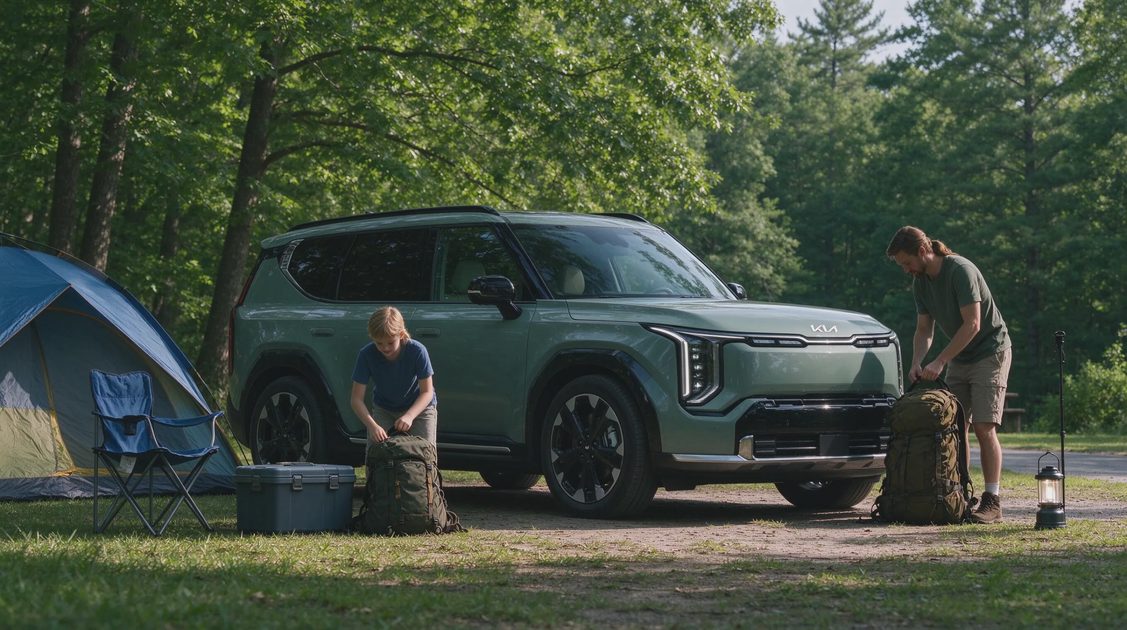
On a fifteen-minute school run almost any reasonable third-row space is acceptable. On a three-hour highway drive the same space becomes a test of patience for adult passengers. Families who anticipate regular long trips with six or seven people should treat third-row adult comfort as a primary evaluation point rather than an afterthought. Those who use the third row mainly for children on short hops can accept more compromise.
Temperature control and air vents in the third row also influence longer-trip comfort. Adequate airflow reduces complaints in both summer heat and winter cold. USB ports or power outlets let children occupy themselves without draining the front-row devices. These supporting features do not increase legroom, but they make the existing space more usable.
Setting Realistic Family Expectations
The EV9’s third row is best understood as a flexible family space rather than a full-time adult seating area. Children and smaller passengers will generally be comfortable for normal family duty. Adults will fit for shorter trips and can manage longer ones if the second row is positioned with them in mind and if the trip includes stops. Families that require three adult-friendly rows for frequent long-distance travel may need to adjust expectations or consider how often the third row will actually be occupied by adults.
Test the vehicle with the people who will sit in the third row. Adjust the second row to the positions you expect to use daily. Sit for more than a few seconds. Check entry and exit with child seats in place if that is the normal configuration. The resulting impression will be more reliable than any single published dimension. The EV9 can serve family needs well when the third-row use case matches its practical strengths rather than an idealized passenger count.

