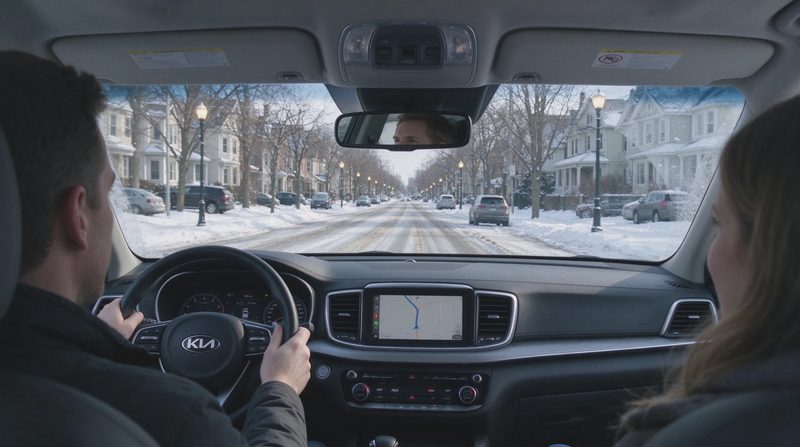
Chicago winters produce a familiar mix of packed snow, ice patches, slush, and occasional heavy accumulation. Families who drive Tellurides, Sportages, EV9s, or other Kia models with all-wheel drive often wonder what the AWD system and any Snow Mode actually change when the temperature drops and the roads turn white. Marketing language can imply a level of capability that exceeds what the systems deliver. Real winter driving depends on tires, speed, following distance, and judgment as much as on the drivetrain badge.
This article explains the practical effects of AWD and Snow Mode in typical suburban and highway conditions around Chicago and the broader Midwest. It does not invent performance data or claim that any system makes a vehicle invincible. The goal is accurate expectations so that drivers use the available tools correctly and still respect the limits of physics.
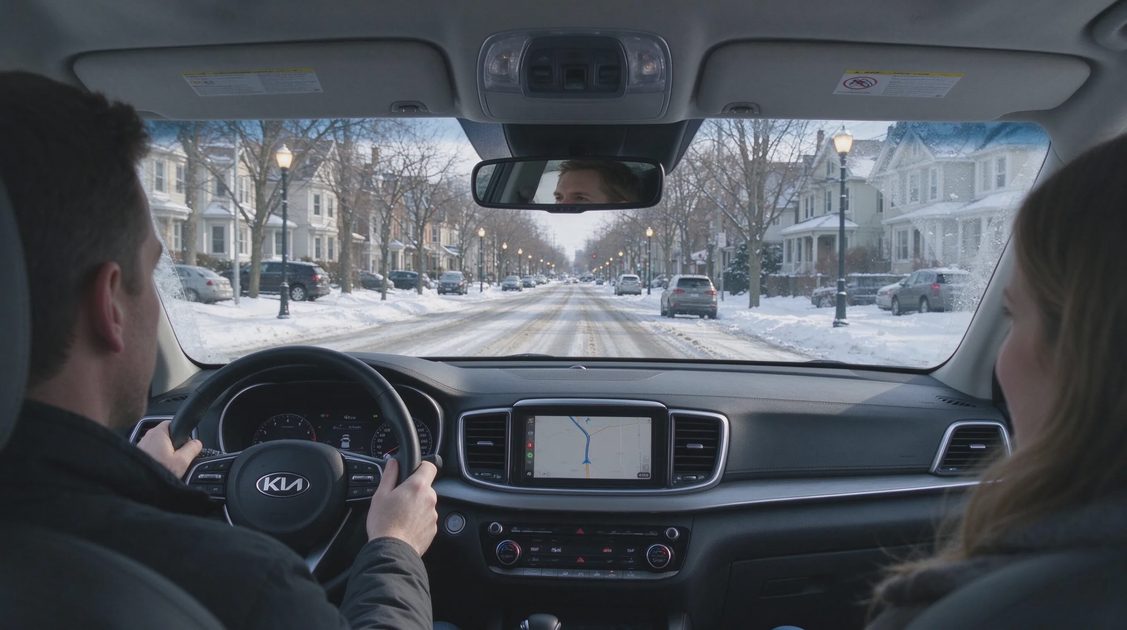
What All-Wheel Drive Actually Does
All-wheel drive systems send torque to both the front and rear axles when the vehicle detects slip or, in some designs, proactively. The purpose is to improve traction during acceleration and, to a lesser extent, to stabilize the vehicle when one or more wheels lose grip. AWD does not increase braking ability on ice or snow. It does not allow higher cornering speeds. It does not replace the need for appropriate tires.
In light to moderate snow, AWD helps the vehicle move smoothly away from a stop and maintain progress on low-traction surfaces where a front-wheel-drive vehicle might spin the front tires. On packed snow or light ice, the system can reduce the chance of wheelspin when climbing a modest grade or merging onto a highway. Once the vehicle is moving at speed, the primary safety factors remain tire grip, speed, and available clear space ahead.
Snow Mode’s Typical Changes
Snow Mode, when equipped, usually alters throttle response, shift behavior (in non-EV models), and the aggressiveness of traction control. The accelerator pedal becomes less sensitive so that small inputs do not produce sudden torque spikes that break traction. Transmission logic, if present, may hold lower gears or shift more gently. Traction control and the AWD system may intervene earlier to limit wheelspin.
The net effect is smoother, more predictable progress in slippery conditions. Snow Mode does not add horsepower or create grip that the tires cannot provide. It simply helps the driver apply the available grip more progressively. On glare ice or in deep unplowed snow, the mode still cannot overcome inadequate tires or excessive speed. Drivers should treat it as a refinement of control rather than a capability upgrade.
Tires Remain the Dominant Factor
No AWD system or drive mode can compensate for worn all-season tires on ice. Winter or snow-rated tires dramatically improve both acceleration and braking traction in cold temperatures and on snow-covered roads. All-season tires harden as temperatures fall and lose the ability to conform to the road surface. The difference is noticeable in the first winter storm and becomes critical in the second and third.
Families in the Chicago area who regularly face snow and ice should consider a dedicated set of winter tires mounted on separate wheels. The investment is modest compared with the cost of a collision or a stranded vehicle. AWD plus winter tires is a capable combination. AWD plus worn all-seasons is only a modest improvement over two-wheel drive with the same tires.
Acceleration, Braking, and Cornering Realities
AWD helps most during acceleration from a stop or when climbing. It contributes less during braking because braking grip is still limited by the tire-road interface at each wheel. ABS and electronic brake distribution work regardless of AWD, but they cannot create friction that does not exist. Following distances must increase substantially on snow and ice; the usual three-second rule becomes inadequate.
Cornering grip is likewise tire-dependent. Entering a highway ramp or a suburban intersection too fast will exceed available lateral traction whether the vehicle is AWD or not. Snow Mode’s gentler throttle can help when exiting a turn, but the entry speed must still be appropriate. Drivers who rely on the AWD badge to maintain summer speeds in winter conditions eventually discover the limits in an unpleasant way.
Highway Versus Neighborhood Driving
On cleared or partially cleared expressways, AWD provides confidence during lane changes and moderate acceleration. The larger benefit appears in neighborhood streets, school lots, and secondary roads that receive less prompt plowing. Pulling away from a stop sign on a snow-covered residential street, climbing a short driveway grade, or moving through an unplowed apartment complex lot are the situations where AWD shows its value most clearly.
Deep snow remains a different problem. Most crossover AWD systems are not designed for sustained operation in heavy accumulation. Ground clearance, approach angles, and the risk of packing snow into the underbody become limiting factors. When snow depth exceeds the vehicle’s comfortable clearance, the correct decision is often to wait for plows rather than to force progress.
EV-Specific Winter Considerations
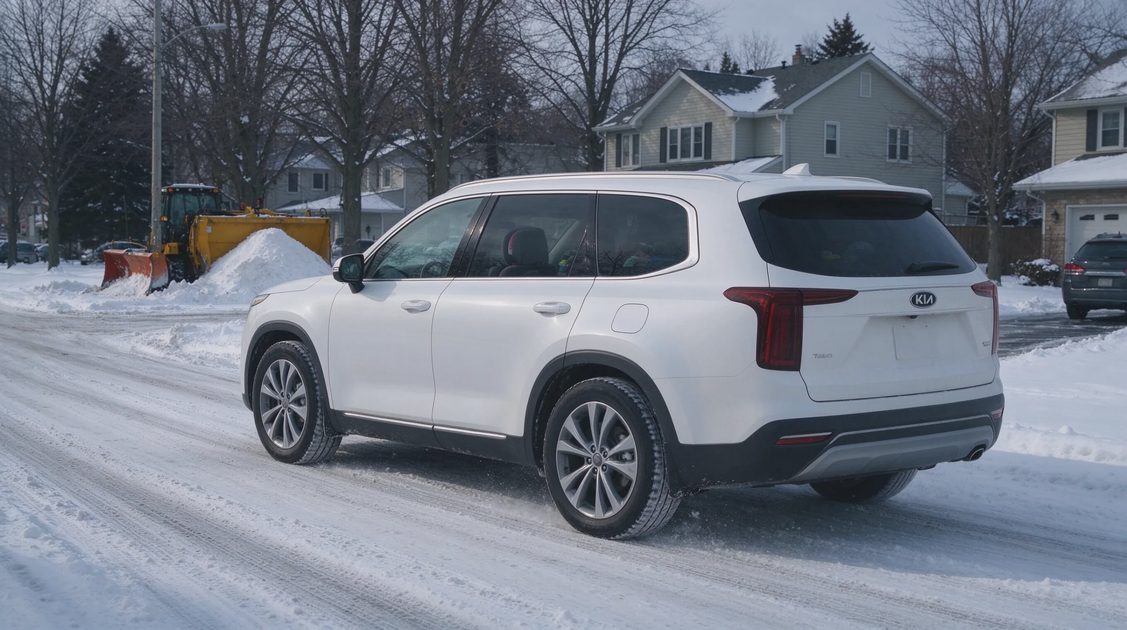
Electric models such as the EV9 add battery-temperature and range factors to the winter equation. Cold temperatures reduce available range; using climate control further increases energy consumption. Preconditioning the battery and cabin while still plugged in mitigates some of the loss. AWD versions of electric vehicles still rely on the same tire and speed principles as their gas counterparts.
Regen braking behavior can feel different on low-traction surfaces. Many drivers prefer a lower regen setting in snow so that the vehicle does not decelerate more aggressively than the available grip can support. Familiarity with the specific vehicle’s regen modes and traction-control behavior is part of competent winter operation.
Practical Winter Habits That Matter More Than Modes
The table below summarizes what AWD and Snow Mode change—and what they leave unchanged—under typical Chicago-area winter conditions.
Condition or Action | What AWD Changes | What Snow Mode Changes | What Still Depends on Driver & Tires |
|---|---|---|---|
Moving from a stop in light snow | Reduces front-wheel spin, improves progress | Softens throttle for smoother application | Tire tread and pressure remain decisive |
Climbing a modest snowy grade | Distributes torque to maintain momentum | Limits sudden torque spikes | Speed and tire grip set the limit |
Braking on packed snow or ice | Little to no direct benefit | No meaningful change | Following distance and tire compound |
Cornering on slippery surfaces | Minor stability help if slip is detected | Gentler power application on exit | Entry speed and tire lateral grip |
Highway lane changes in slush | Modest traction improvement | Smoother response if accelerating | Visibility, speed, and tire condition |
Deep unplowed snow | Limited help; clearance becomes issue | Limited help | Often better to wait for plows |
Use the table as a reminder that systems assist the driver; they do not replace judgment or proper equipment.
Building a Realistic Winter Approach
Equip the vehicle with tires appropriate for the conditions you actually face. Keep the AWD system and Snow Mode available and understand what each does. Increase following distances, reduce speed, and clear all windows and lights before every trip. Carry a basic winter kit—ice scraper, brush, small shovel, flashlight, and phone charger—so that minor delays do not become major problems.
AWD and Snow Mode make a Kia more manageable in Chicago winter conditions when they are paired with good tires and deliberate driving. They do not make the vehicle immune to ice, deep snow, or excessive speed. Treat them as useful tools within a larger set of winter habits rather than as guarantees of effortless travel. The families who move through winter with the least drama are usually the ones who respect the limits as much as they use the available systems.

