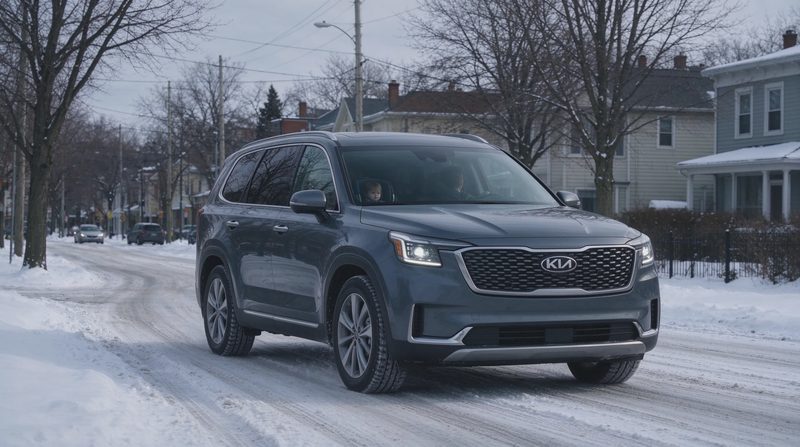
Three-row SUVs are sold on the promise of space for everyone and everything. In practice, the differences that matter show up on school mornings, grocery runs, youth sports weekends, and winter drives rather than on a brochure page. The Kia Telluride, Hyundai Palisade, and Toyota Grand Highlander all aim at families who need room for kids, occasional adult passengers in the third row, and cargo that does not fit in a two-row crossover. The useful comparison is which one fits the specific mix of passengers, climate, budget, and ownership priorities without forcing unnecessary compromises.
This article stays with ownership realities: seating flexibility, cargo with seats in different positions, winter behavior, technology that reduces daily friction, and the cost side of the decision. It does not invent comparative test results or declare a universal winner. Availability, powertrain options, and exact equipment change by model year and market, so any final choice still requires checking the specific vehicles under consideration.
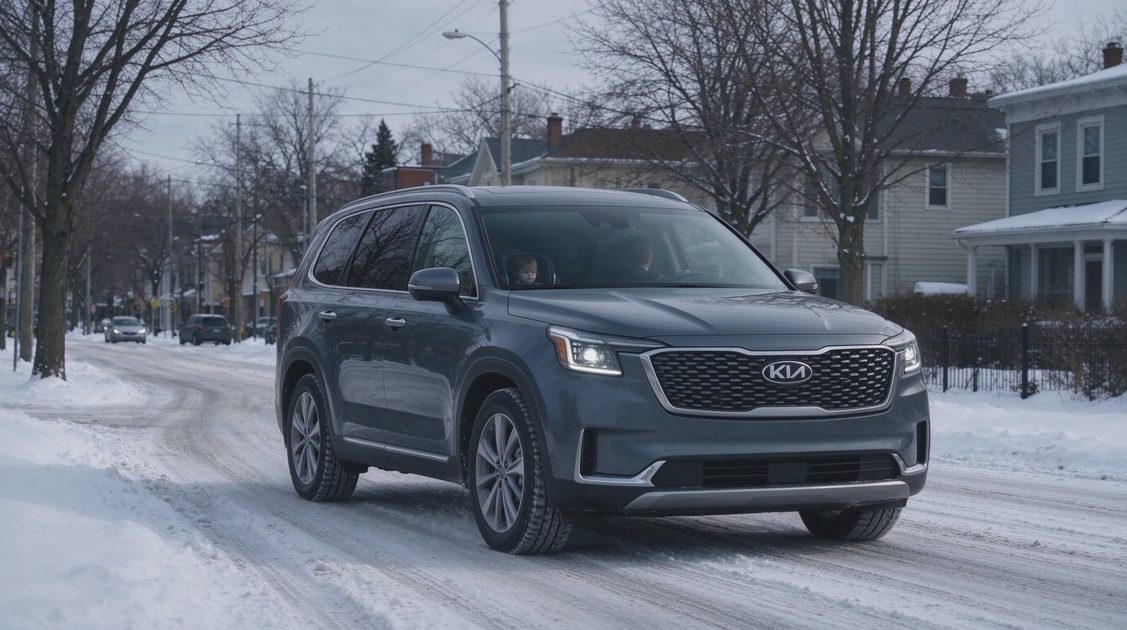
The Shared Job Description
All three vehicles are designed to carry more people and gear than a typical midsize SUV while remaining easier to park and drive than a full-size body-on-frame SUV. They target suburban families, carpool schedules, and road trips where the third row sees regular or at least occasional use. All-wheel-drive versions are commonly chosen in snow-belt regions. Hybrid powertrains appear in some of the lineup options for buyers focused on fuel cost.
The shared strengths are packaging and versatility. The shared limitations are that no three-row crossover is a cargo van, and none will match the towing capacity or off-road durability of a purpose-built truck-based SUV. Buyers who need maximum towing or serious trail capability are looking at a different category.
Seating and Passenger Reality
Second-row comfort and third-row usability decide whether a three-row vehicle feels like a true family hauler or a two-row vehicle with occasional jump seats. Captain’s chairs versus a bench in the second row change access to the third row and the total passenger count. Adult-sized third-row space varies; some configurations work reasonably for shorter trips with adults, while others are better limited to children.
Families should test the exact seating layout they intend to buy. Child-seat installation in the second row, the effort required to fold or tumble seats for third-row access, and the residual legroom and headroom with seats occupied all matter more than maximum claimed capacity. A vehicle that seats eight on paper may feel tight with three child seats or with adults in the third row for more than a short hop.
Winter clothing and bulky outerwear further reduce effective space. Shoppers in colder climates should consider that reality when evaluating third-row comfort claims.
Cargo With the Seats Working
Cargo volume numbers are useful only when paired with seat positions. With the third row up, the remaining space behind it determines whether a Costco run or a weekend sports load is realistic. With the third row folded, the difference between models can be significant for strollers, luggage, or bulkier gear. Some vehicles offer under-floor storage or more flexible folding patterns that improve day-to-day usability.
Real family loads include soccer bags, folding chairs, grocery totes, a stroller, and sometimes a large dog crate or pet barrier. Measuring or testing those combinations is more informative than relying solely on manufacturer cubic-foot figures. Power liftgates and hands-free openers reduce friction when arms are full; their presence and reliability should be confirmed on the specific trim.
Powertrains, Efficiency, and Winter Behavior
Gas, hybrid, and in some cases other electrified options create different ownership profiles. A hybrid may reduce fuel cost for high-mileage suburban commuting but can behave differently in extreme cold. All-wheel-drive systems vary in how they distribute torque and how they respond in snow mode or similar settings. Tire choice often matters as much as the drivetrain badge once temperatures drop and roads are covered.
Buyers should match the powertrain to annual mileage, local fuel or electricity prices, and climate. A low-mileage household may see less benefit from a hybrid premium. A household that regularly drives in heavy snow should prioritize proven all-wheel-drive calibration and appropriate tires over marketing language about terrain modes.
Technology and Daily Friction
Infotainment responsiveness, wireless phone integration stability, and the clarity of driver-assistance systems affect daily satisfaction more than the number of speakers or the size of the screen alone. Wireless Apple CarPlay or Android Auto that disconnects creates more frustration than a slightly smaller display that works reliably. Digital key features and remote climate controls are convenient when they function consistently; they are annoyances when setup is complicated or reliability is uneven.
Driver-assistance suites should be evaluated for the conditions in which they will actually be used—highway commuting, stop-and-go traffic, or mixed suburban roads. Features that require clear lane markings or specific weather conditions have limits that owners discover quickly.

Ownership Cost Considerations
Purchase price is only the starting point. Insurance quotes differ by vehicle and by the driver’s record and location. Maintenance schedules, tire sizes and costs, and the expected trajectory of depreciation all influence five-year cost. Warranty terms and the practical experience of obtaining covered repairs matter when something goes wrong.
Shoppers should obtain insurance estimates for the exact configurations under consideration and review the published maintenance intervals. Residual value trends, where available from reputable sources, help frame lease-versus-buy decisions. Dealer add-ons and protection products should be scrutinized against the factory warranty so that buyers do not pay twice for overlapping coverage.
Side-by-Side Decision Factors
The table below summarizes practical comparison points that families typically weigh. Exact specifications vary by model year, trim, and options; treat the table as a decision checklist rather than a fixed ranking.
Decision Factor | Kia Telluride | Hyundai Palisade | Toyota Grand Highlander |
|---|---|---|---|
Core family packaging | Strong three-row focus, popular captain-chair setups | Similar three-row mission, close packaging to Telluride | Emphasizes space and hybrid efficiency options |
Third-row practicality | Usable for children; adult comfort varies by trip length | Comparable to Telluride in most layouts | Often prioritizes passenger and cargo flexibility |
Cargo with third row up | Adequate for daily loads; verify with real gear | Similar constraints; check under-floor storage | Frequently competitive on volume and flexibility |
Winter and AWD emphasis | Common AWD choice in snow regions | Parallel AWD availability | Strong hybrid + AWD combinations in many markets |
Ownership cost focus | Competitive pricing and warranty terms | Close sibling pricing and coverage | Hybrid efficiency may lower fuel cost for some |
Technology daily reliability | Check wireless integration and updates | Similar tech stack considerations | Toyota interface preferences vary by user |
Use the table to identify which factors matter most for your household, then verify the current model-year details on the vehicles you can actually buy.
Choosing Without the Brochure Glow
Begin with the non-negotiables: number of regular passengers, child-seat requirements, climate, annual mileage, and budget including insurance. Test the seating layout with the actual seats you intend to use. Load realistic cargo if the dealer will allow it. Drive the powertrain you are considering in conditions close to your normal roads.
Compare out-the-door prices rather than monthly payments alone. Confirm warranty coverage and any open recalls or service campaigns through official channels. Decide whether hybrid efficiency, maximum third-row comfort, or lowest possible purchase price is the higher priority.
The Telluride, Palisade, and Grand Highlander all can serve a family well when the configuration matches the life it will lead. The one that fits real life is the one whose seating, cargo, winter behavior, and ownership cost align with the weekly routine rather than the idealized weekend brochure photo.


