
Choosing a Telluride trim is less about collecting every available feature and more about matching equipment to the way the vehicle will actually be used. A family that primarily needs reliable three-row space, all-wheel drive for winter, and enough cargo room for school and weekend gear does not automatically need the highest trim. A shopper who wants the quietest cabin, the most advanced driver-assistance suite, and the premium interior materials may find the step-up worthwhile. The practical question is which differences justify the price gap once the vehicle leaves the lot.
This comparison focuses on the core LX, EX, and SX trims in the current generation as they are commonly configured for U.S. buyers. It does not invent test results or claim universal superiority for any single trim. Equipment packages and regional availability can change, so the final check always belongs to the specific window sticker and the dealer’s order form.

Starting With the Real Decision
Most Telluride shoppers are not choosing between a compact crossover and a full-size SUV. They are already committed to the three-row package and are deciding how much interior refinement, technology, and convenience they want to pay for. The LX is the entry point. The EX adds meaningful comfort and convenience features. The SX layers on further luxury and technology.
The smartest buy depends on priorities. If the vehicle will spend most of its life on school runs, grocery trips, and occasional highway travel with kids and a dog, the EX often captures the features that matter without the full SX premium. If the buyer wants the most complete driver-assistance package, premium audio, and higher-end materials as standard or near-standard, the SX becomes easier to justify. The LX remains viable for buyers who want the core Telluride space and capability at the lowest possible transaction price.
What the LX Actually Delivers
The LX provides the fundamental Telluride package: three rows, available all-wheel drive, a capable powertrain, and the safety and driver-assistance features that form the baseline for the model. Seating materials and interior finishes are simpler. Some convenience items that appear higher in the range—such as more advanced climate controls, larger screens, or power-folding third-row seats—may be absent or optional depending on the exact configuration and model year.
For a cost-conscious buyer, the LX can be the rational choice. It still offers the space that makes the Telluride attractive to families. It can be equipped with all-wheel drive for winter conditions common in the Midwest and other snow-belt regions. The ownership math is simpler: lower purchase price, potentially lower insurance and taxes in some states, and fewer features that can become service items later.
The limitation is comfort and convenience over longer ownership. Families who frequently use the third row or who want easier access and more refined materials may find the LX adequate but not ideal. Shoppers should verify the exact safety and driver-assistance content on the specific vehicle, because packaging can shift between years.
Where the EX Changes Daily Use
The EX typically sits in the practical middle. It usually adds interior upgrades, more convenient power features, and technology that reduces friction in daily driving. Dual-zone or multi-zone climate control, better seat materials, additional USB ports, and a more complete infotainment experience are the kinds of changes that show up on school mornings and weekend trips rather than on a specification sheet.
For many families the EX is the trim that feels complete without excess. Power-adjustable seats, a power liftgate, and improved second-row comfort matter when the vehicle is loaded with children, sports equipment, and groceries. The cabin is quieter and more finished than the LX in most configurations, which reduces fatigue on longer drives.
The price step from LX to EX should be evaluated against how often those features will be used. A buyer who rarely carries more than two passengers and who prioritizes the lowest possible payment may still prefer the LX. A household that uses the third row regularly and values easier loading will usually find the EX difference noticeable within the first few months of ownership.
What the SX Adds and What It Costs
The SX moves further into premium territory. Higher-end materials, more advanced driver-assistance features, larger or higher-resolution displays, premium audio, and additional convenience items such as power-folding seats or enhanced ambient lighting are typical of the step. Some of these features improve safety and ease of use; others are primarily about refinement and status.
The ownership question is whether the additional monthly cost or higher out-the-door price is recovered in daily satisfaction or residual value. Premium audio and quiet cabin materials are appreciated on long trips. More complete driver-assistance suites can reduce stress in highway traffic. Power features that make the third row easier to access matter for families who rotate child seats and adult passengers frequently.
Buyers should still separate must-have function from nice-to-have polish. An SX that spends most of its life in suburban stop-and-go traffic may not exercise every advanced feature enough to justify the premium over a well-equipped EX. Conversely, a household that values the quietest possible cabin and the most complete technology package may view the SX as the only trim that meets the requirement.
Family Use Versus Feature Lists
Feature lists do not automatically translate into family usefulness. A larger touchscreen is helpful if the interface is responsive and the phone integration is stable. A panoramic roof is enjoyable until summer heat or winter condensation becomes an issue. Heated and ventilated seats matter more in climates with real temperature extremes than in mild regions.
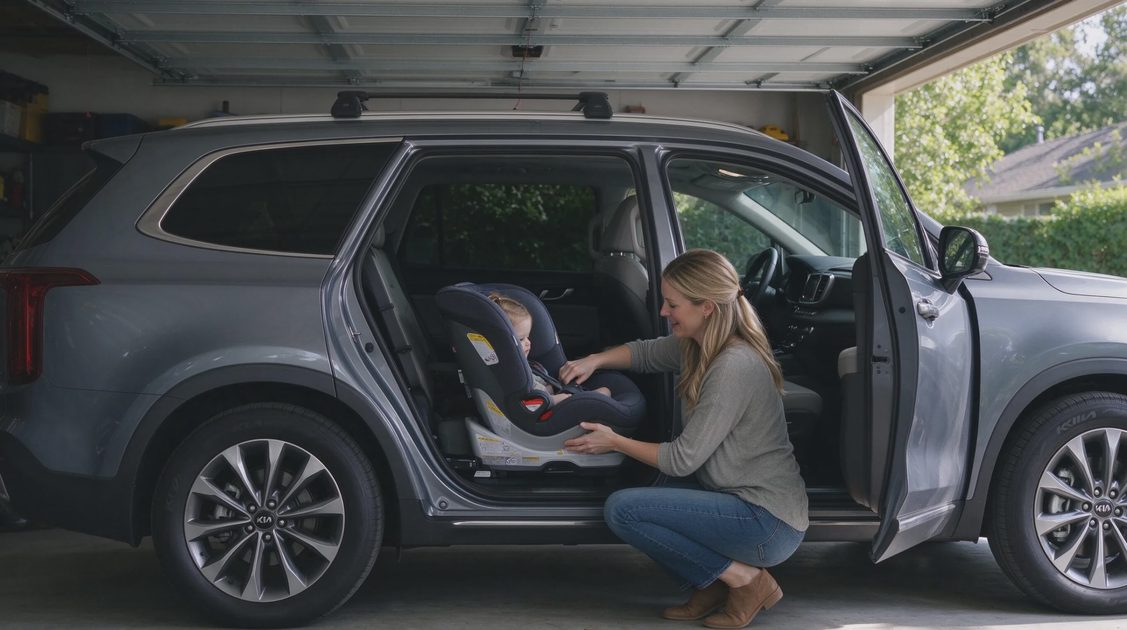
Practical family checks include how easily child seats install in the second row, whether the third row remains usable with two or three passengers, and how much cargo remains with the third row up. These realities cut across trims. An LX with the right seat configuration can still serve a family well; an SX with poorly planned cargo use will still frustrate on a Costco run.
Winter capability is another cross-trim consideration. All-wheel drive and appropriate tires matter more than the trim badge when temperatures drop and roads are slick. Snow mode or terrain settings, when present, should be understood for what they change in throttle and traction behavior rather than treated as magic.
Pricing Reality and Negotiation
Trim choice interacts with negotiation. A heavily optioned EX can approach the price of a lightly optioned SX. Dealer add-ons and protection packages can further blur the differences. Shoppers should obtain the out-the-door number for each configuration they are considering and compare those totals rather than focusing only on the advertised monthly payment.
Lease-versus-buy math also shifts with trim. Higher residual values on upper trims can improve lease payments in some programs, while the absolute cost of ownership over five years may still favor a lower trim with fewer features to maintain. Insurance quotes should be pulled for the specific trims under consideration, because replacement cost and theft or damage risk can differ.
The smartest approach is to decide which features will be used weekly, then price the lowest trim that includes them. Everything above that line is a comfort or preference purchase rather than a necessity.
Making the Call Without the Sales Pressure
Start with the use case. List the regular passengers, the typical cargo, the climate, and the annual mileage. Decide whether the third row needs to be adult-friendly or primarily for children. Determine how much value is placed on a quieter cabin, more complete driver assistance, and higher-end materials.
Then compare the actual equipment on the vehicles available, not the brochure ideal. Confirm the warranty terms are identical across trims for the powertrain and basic coverage. Check current recall and service campaign status for the model year in question through official sources. Calculate a realistic five-year cost that includes fuel or electricity, insurance, maintenance, and expected depreciation.
The LX is the rational base for buyers who want the Telluride’s space at the lowest cost. The EX is often the practical sweet spot for families who want the features that reduce daily friction. The SX is the choice for those who want the most complete package and are prepared to pay for it. None of the three is universally “best.” The smartest buy is the one whose equipment matches the life the vehicle will actually lead.


