
Kia’s long powertrain warranty is one of the reasons many buyers choose the brand. The headline—10 years or 100,000 miles—sounds simple. The actual coverage is more detailed. Understanding what the warranty protects, what it does not protect, and how the claim process works prevents frustration when a component fails and the owner expects coverage that was never included.
This explanation stays with the structure of the warranty as it is commonly described for U.S. vehicles. Specific terms can vary by model year and by whether the vehicle is still within the original ownership period. Always consult the warranty booklet that came with the vehicle or the official documentation for the exact model year in question. The goal here is plain-language orientation so that owners know which questions to ask.
The Two Main Layers Most Owners Need to Know
Kia’s coverage is typically divided into a basic new-vehicle warranty and a longer powertrain warranty. The basic warranty covers most parts of the vehicle for a shorter period and lower mileage. The powertrain warranty extends coverage for the major components that propel the vehicle—engine, transmission, and related drivetrain parts—for the longer 10-year/100,000-mile term on original-owner vehicles in most cases.
The distinction matters. A failed alternator, window regulator, or infotainment screen is usually handled under the basic warranty if the vehicle is still within that shorter window. A failed transmission or engine internal part may still be covered under the powertrain warranty even after the basic coverage has expired, provided the other conditions of the warranty are met. Owners who assume every problem is covered for ten years are often surprised when a non-powertrain part fails at year six.
Who Qualifies for the Full Powertrain Term
The longest powertrain coverage is generally reserved for the original purchaser or original lessee. Subsequent owners may receive a shorter remaining powertrain period. This is why private-party buyers and used-vehicle shoppers should request the warranty status in writing and confirm it with a dealer service department if possible. A vehicle that is five years old and has 60,000 miles may still carry substantial powertrain coverage for the original owner and significantly less for a second owner.
Transfer rules and any required documentation are described in the warranty booklet. Keeping the original purchase records and maintenance receipts simplifies later conversations. If the vehicle was leased and then purchased at lease end by the same person, the ownership status should be clarified with the manufacturer or dealer so that coverage expectations remain accurate.
What the Powertrain Warranty Typically Includes
Powertrain coverage generally focuses on the engine, transmission or transaxle, and the drivetrain components that deliver power to the wheels. Internal engine parts, transmission internals, and certain related assemblies fall under this umbrella when they fail due to defects in materials or workmanship. The exact list is itemized in the warranty documents and can differ slightly between conventional, hybrid, and electric powertrains.
Hybrid and electric models include additional high-voltage components under specific terms. Battery coverage may follow a separate schedule with its own years-and-miles limit and capacity-retention conditions. Owners of hybrid or EV models should read the high-voltage section carefully; assumptions carried over from gas-engine coverage can be incorrect. In all cases the warranty addresses defects, not normal wear or damage from external causes.
What Is Commonly Excluded
Warranties do not cover everything that can go wrong. Maintenance items—oil changes, filters, brake pads, wiper blades, and similar wear parts—are excluded. Damage from accidents, misuse, improper maintenance, or modifications is excluded. Cosmetic issues, glass breakage from road hazards, and tire damage are handled under separate policies or not covered at all.
Software updates, certain electronic features, and consumable parts may fall outside powertrain coverage even if they affect how the vehicle drives. If a failure is traced to lack of required maintenance, coverage can be denied. This is why keeping service records matters. The warranty is a commitment against manufacturing defects under normal use; it is not an unlimited repair plan for every possible problem.
How Maintenance Affects Coverage
Manufacturers expect owners to follow the maintenance schedule in the owner’s manual. Oil changes, fluid inspections, and other required services must be performed on time. The work does not always have to be done at a Kia dealer, but it must be performed to the specified standard and documented. Missing or undocumented maintenance is one of the more common reasons for warranty disputes.
When a powertrain claim is filed, the service department may request maintenance records. Digital service histories help; paper receipts from independent shops should be kept in a single folder. If the vehicle has been modified—tuned, lifted, or fitted with non-approved parts—the dealer may examine whether the modification contributed to the failure. Stock configuration and documented care are the simplest path to a clean claim.

The Claim Process in Practice
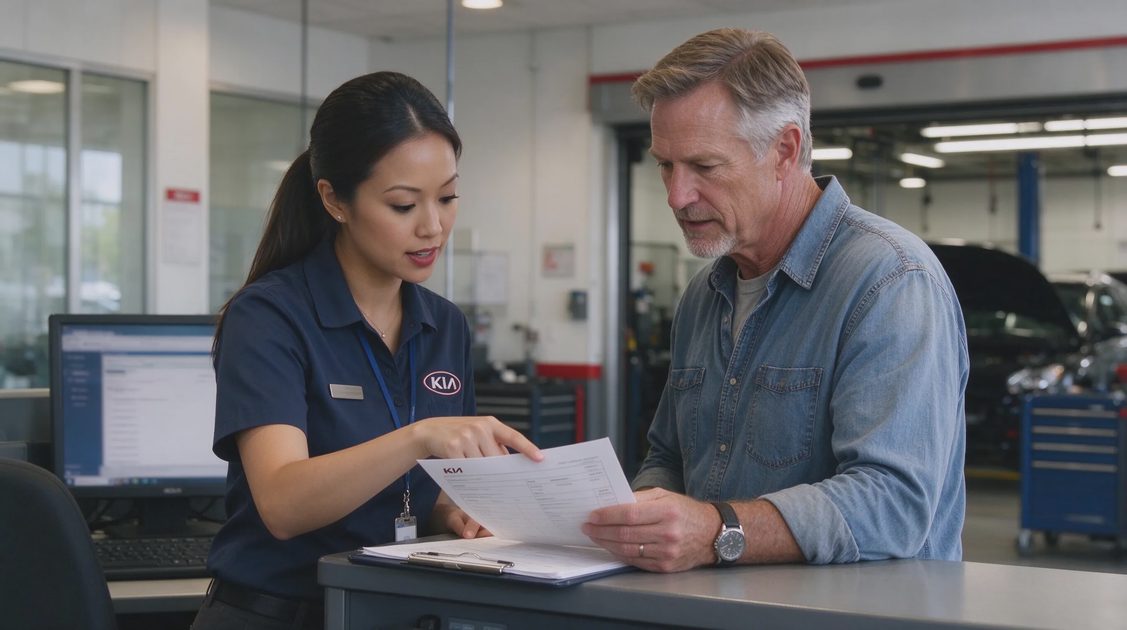
When a covered component fails, the owner schedules a service appointment and describes the symptom. The technician diagnoses the problem and determines whether the failure falls under warranty. If it does, the repair is performed according to manufacturer procedures and the owner is typically responsible only for any deductible that applies (many powertrain claims carry no deductible, but this should be confirmed).
If the diagnosis indicates a non-covered cause, the dealer should explain the reasoning and provide a repair estimate. Owners who disagree can request further review or contact manufacturer customer assistance. Having the vehicle’s service history and a clear description of the symptoms improves the quality of the conversation. Warranty coverage does not guarantee that every visit will end with a free repair; it guarantees that defects within the defined scope will be addressed according to the terms.
Practical Steps for Owners
Read the warranty booklet that belongs to the specific vehicle. Confirm the start date, the basic warranty period, the powertrain period, and any separate hybrid or EV battery terms. Keep maintenance records in one place. Address warning lights and unusual noises early rather than waiting for a larger failure. When a claim is necessary, provide complete information and ask the service advisor to explain the coverage decision in plain language.
The 10-year/100,000-mile powertrain warranty is a meaningful ownership advantage when it is understood accurately. It is not a blanket promise that nothing will go wrong or that every repair is free for a decade. It is a defined commitment on major propulsion components for original owners who maintain the vehicle properly. Knowing the boundaries lets owners use the coverage confidently and avoid disappointment when a problem falls outside those boundaries.